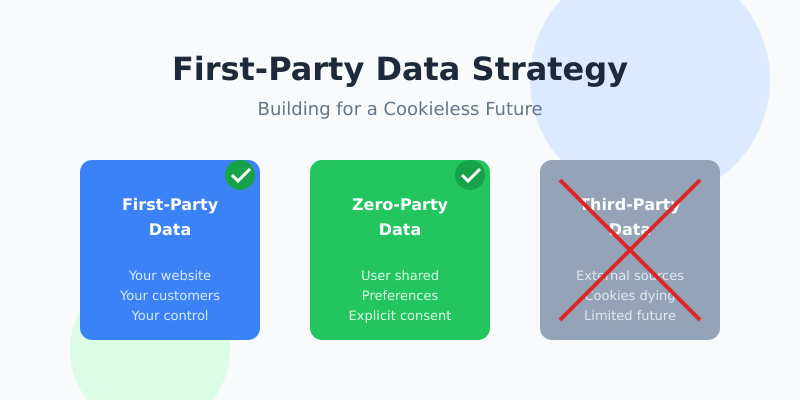
Third-party cookies are already dead in Safari and Firefox. Chrome still holds 65% of browser market share, but the writing is on the wall: the future of digital marketing belongs to those who master first-party data. In this guide, I’ll share practical strategies I’ve developed over 15 years working with companies like Deliveroo, Barclays, and Tesco to help you build a sustainable data strategy.
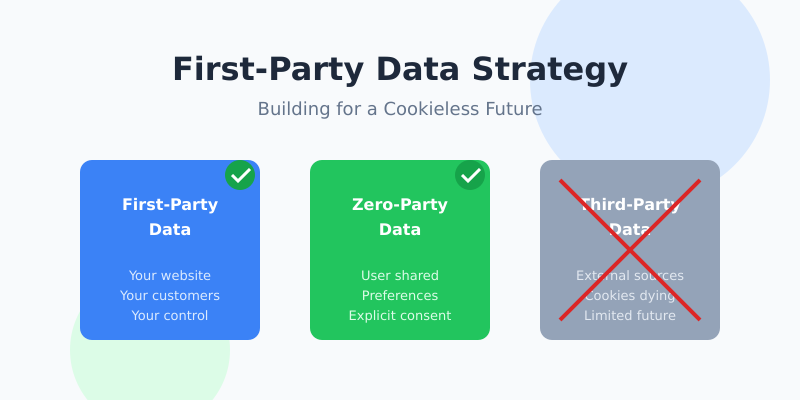
Whether Google eventually deprecates cookies or not, the shift to first-party data isn’t optional—it’s essential. Privacy regulations are tightening, user expectations are changing, and the brands that thrive will be those that build direct relationships with their audiences.
What is First-Party Data (And Why It Matters Now)
Before diving into strategy, let’s clarify what we’re talking about. Data comes in three flavours:
| Type | Definition | Example |
|---|---|---|
| First-Party Data | Data you collect directly from your audience | Purchase history, website behaviour, email engagement |
| Zero-Party Data | Data users intentionally share with you | Preferences, survey responses, quiz answers |
| Third-Party Data | Data collected by external sources | Cookie-based tracking across websites, purchased lists |
The critical difference: first-party and zero-party data are yours. You own it, you control it, and—crucially—you collected it with consent. Third-party data? You’re renting it, and that rental agreement is expiring.
Here’s the reality in 2025: Safari’s Intelligent Tracking Prevention and Firefox already block third-party cookies by default. That’s roughly 35% of web traffic operating in a cookieless environment today. Even if Chrome never removes cookies, building your strategy around borrowed data is like building your house on rented land.
The Business Case for First-Party Data
This isn’t just about compliance—it’s about competitive advantage. When I led the analytics team at Barclays, we rebuilt our marketing attribution using first-party data. The result? We identified £2.3 million in wasted ad spend that third-party tracking had attributed incorrectly.
First-party data delivers three key advantages:
- Accuracy: Data collected directly from your users is inherently more reliable than inferred data from third parties
- Compliance: With GDPR, CCPA, and emerging privacy laws, consent-based collection protects your business
- Ownership: Your data strategy doesn’t depend on Google’s product decisions or browser policies
At Deliveroo, we built our entire customer analytics infrastructure on first-party data. When iOS 14.5 introduced App Tracking Transparency and decimated third-party mobile attribution, our measurement capabilities remained intact. Competitors scrambled; we continued optimising.
Building Your Data Collection Framework
Effective first-party data collection rests on three pillars: value exchange, collection points, and consent management.
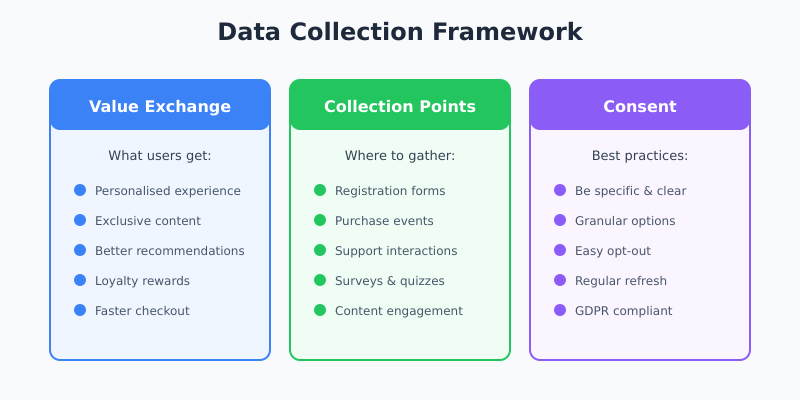
Value Exchange: What Users Get
Users won’t share data for nothing. Every collection point needs a clear value proposition:
- Account creation: Access to order history, saved preferences, faster checkout
- Newsletter signup: Exclusive content, early access, discounts
- Preference centre: Personalised recommendations, relevant communications
- Loyalty programme: Points, rewards, member-only benefits
The exchange must feel fair. At Tesco, we found that customers who understood exactly how their data improved their experience were 3x more likely to opt in to data collection.
Collection Points: Where to Gather Data
Map every touchpoint where you can collect first-party data:
| Touchpoint | Data Type | Value Exchange |
|---|---|---|
| Registration | Email, name, preferences | Account benefits |
| Purchase | Transaction data, product interests | Order tracking, recommendations |
| Support | Issues, feedback, satisfaction | Better service |
| Content | Topic interests, engagement | Relevant content |
| Surveys | Preferences, opinions | Product improvements |
Consent Management: Doing It Right
Consent isn’t a checkbox—it’s a relationship. The ICO’s guidance on cookies makes clear that valid consent must be freely given, specific, informed, and unambiguous. Best practices I’ve seen work:
- Be specific: Explain exactly what you’re collecting and why
- Make it granular: Let users choose what to share
- Easy opt-out: If users can’t leave easily, they won’t join willingly
- Regular refresh: Re-confirm consent periodically
Technical Implementation: Data Layer Architecture
Here’s where many guides stop—but this is where real value begins. A proper data layer is the foundation of any serious first-party data strategy.
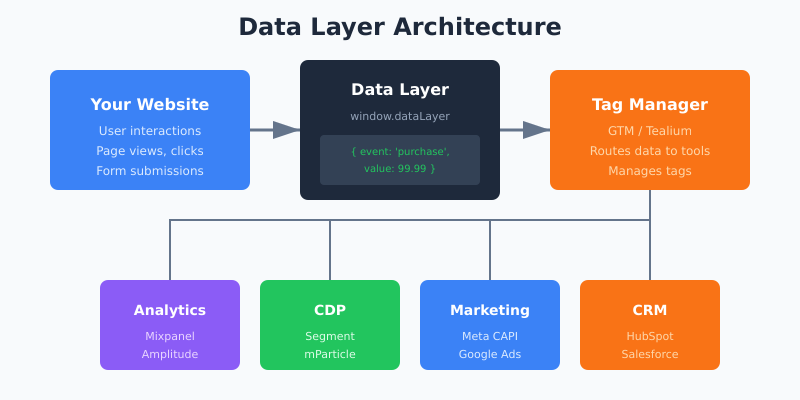
A data layer is a JavaScript object that sits between your website and your analytics tools. It standardises how data is collected and shared, making your tracking more reliable and easier to maintain. The Google Tag Manager documentation provides excellent guidance on implementation.
Here’s a basic structure:
window.dataLayer = window.dataLayer || [];
dataLayer.push({
  'event': 'page_view',
  'page_type': 'product',
  'user_status': 'logged_in',
  'user_id_hashed': 'abc123def456',
  'content_group': 'electronics'
});
For e-commerce, extend this with transaction data:
dataLayer.push({
  'event': 'purchase',
  'transaction_id': 'T12345',
  'value': 99.99,
  'currency': 'GBP',
  'items': [{
    'item_id': 'SKU001',
    'item_name': 'Wireless Headphones',
    'price': 99.99,
    'quantity': 1
  }]
});
Server-side tracking takes this further. Instead of sending data from the browser (where ad blockers can interfere), you send it from your server. This improves data accuracy significantly—we saw a 15-20% increase in tracked conversions at Deliveroo after implementing server-side tracking.
Tools like Google Tag Manager Server-Side, Segment, or Tealium can handle this, routing data to your analytics platforms without relying on client-side cookies.
Activating First-Party Data Across Channels
Collecting data is pointless if you don’t use it. Here’s how to activate first-party data across your marketing channels.

Email Personalisation
Email remains the highest-ROI channel for most businesses, and first-party data supercharges it:
- Segment by purchase history and browsing behaviour
- Trigger emails based on specific actions (abandoned cart, product views)
- Personalise content based on stated preferences
On-Site Experience
Use first-party data to personalise the website experience:
- Product recommendations based on browsing history
- Dynamic content based on user segment
- Returning visitor recognition and tailored messaging
Paid Media Activation
First-party data feeds directly into advertising platforms:
- Customer Match (Google): Upload hashed email lists for targeting and exclusion
- Custom Audiences (Meta): Create lookalike audiences from your best customers
- Conversions API: Send conversion data server-side for better attribution
The key insight: first-party data makes your paid media more efficient by improving both targeting and measurement.
Tools and Platforms for First-Party Data
The right tools depend on your scale and complexity. Here’s my assessment based on implementing these across various organisations:
| Tool | Best For | Starting Price |
|---|---|---|
| Segment | Startups to mid-market, clean API | Free tier available |
| Tealium | Enterprise, complex requirements | Custom pricing |
| mParticle | Mobile-first businesses | Custom pricing |
| Mixpanel | Product analytics, SaaS | Free tier available |
| Amplitude | Product analytics, larger scale | Free tier available |
| Rudderstack | Open-source alternative to Segment | Free tier available |
For most businesses starting out, I recommend Segment or Rudderstack for data collection, paired with Mixpanel or Amplitude for analysis. This gives you a solid foundation without enterprise-level costs.
Measuring Success: KPIs That Matter
You can’t improve what you don’t measure. Track these metrics to assess your first-party data strategy:
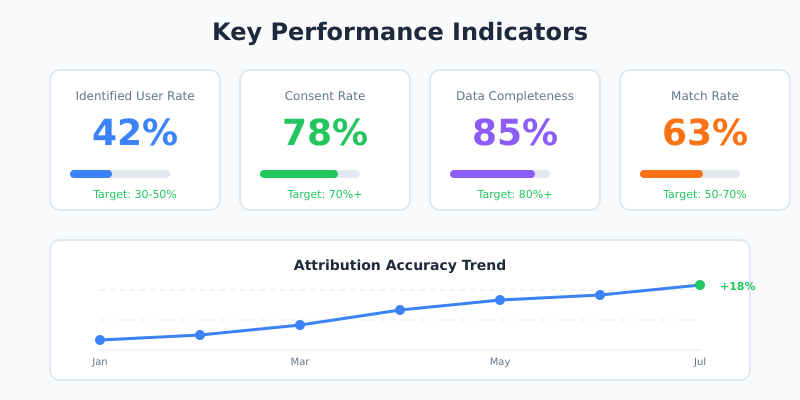
| Metric | What It Measures | Target |
|---|---|---|
| Identified User Rate | % of visitors with known identity | 30-50% for e-commerce |
| Consent Rate | % accepting data collection | 70%+ with good UX |
| Data Completeness | % of profiles with key fields | 80%+ for active users |
| Match Rate | % matched in ad platforms | 50-70% is strong |
| Attribution Accuracy | Conversion tracking reliability | Compare to baseline |
Review these monthly. At Barclays, we built dashboards specifically tracking first-party data health, which helped us identify collection gaps before they impacted campaign performance.
Common Mistakes to Avoid
After implementing first-party data strategies across multiple organisations, I’ve seen these mistakes repeatedly:
- Collecting without activating: Data sitting in a warehouse creates no value. Build activation use cases before expanding collection.
- Ignoring data quality: Duplicate records, inconsistent formats, and outdated information poison your insights. Invest in data hygiene.
- Over-complicating consent: Complex consent flows kill conversion rates. Keep it simple and transparent.
- Siloed data: First-party data spread across disconnected systems can’t deliver personalisation. Unify your customer view.
- No value exchange: Asking for data without offering something in return feels extractive. Always lead with user benefit.
Frequently Asked Questions
Is first-party data really necessary if Google keeps cookies?
Yes. Even if Chrome never removes cookies, Safari and Firefox already block them—that’s 35% of users. Plus, privacy regulations and user expectations are shifting regardless of Google’s decisions. Building on first-party data future-proofs your business.
How long does it take to build a first-party data strategy?
A basic implementation takes 2-3 months: data layer setup, consent management, and initial activation. A mature strategy with advanced personalisation typically takes 6-12 months. Start small, prove value, then expand.
What’s the difference between a CDP and a DMP?
A Customer Data Platform (CDP) focuses on first-party data and builds persistent customer profiles. A Data Management Platform (DMP) traditionally handled third-party cookie data for advertising. As cookies decline, CDPs are becoming the standard while DMPs are evolving or becoming obsolete.
Can small businesses implement first-party data strategies?
Absolutely. You don’t need enterprise tools. Start with basics: email collection with clear value exchange, a simple data layer using Google Tag Manager, and Mixpanel or Amplitude’s free tiers for analysis. Scale your tooling as your needs grow.
How do I measure ROI on first-party data investment?
Track three areas: improved attribution accuracy (reduced wasted spend), higher email/personalisation performance (increased revenue), and reduced dependency on third-party data costs. Most organisations see positive ROI within 6-12 months.
Getting Started: Your Next Steps
Building a first-party data strategy doesn’t require a massive transformation. Start with these steps:
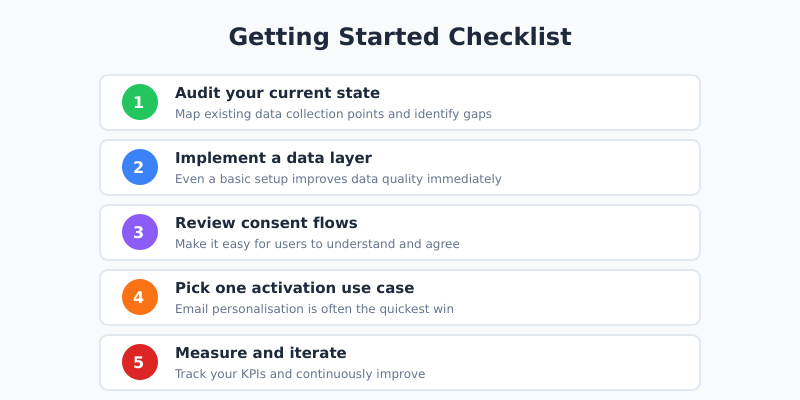
- Audit your current state: Where are you collecting first-party data today? Where are the gaps?
- Implement a data layer: Even a basic one improves data quality immediately
- Review consent flows: Are you making it easy for users to understand and agree?
- Pick one activation use case: Email personalisation is often the quickest win
- Measure and iterate: Track your KPIs and continuously improve
The cookieless future isn’t coming—for many users, it’s already here. The businesses that invest in first-party data now will have a significant advantage over those still scrambling to adapt.
If you’re looking to discuss your specific situation, feel free to reach out at [email protected].